A Reflection on the Readings for the Second Sunday of Ordinary Time
Reading 1: 1 Sm 3:3b-10, 19
Responsorial Psalm: Ps 40:2, 4, 7-8, 8-9, 10
Reading II: 1 Cor 6:13c-15a, 17-20
Alleluia: Jn 1:41, 17b
Gospel: Jn 1:35-42
We are, again, in Ordinary Time, and this week, we celebrate the 2nd Sunday in Ordinary Time. That may prompt some to ask: “What happened to the 1st Sunday?” When the “Baptism of the Lord” is celebrated in the liturgical year (as it was last Sunday), that celebration takes the place of the First Sunday in Ordinary Time. Consequently, this Sunday is the beginning of the 2nd week in O.T.
The books of 1st and 2nd Samuel give us about a century of Israelite history between the time of the Judges and the establishment of the monarchy in Israel, probably the 12th to 11th centuries B.C. This was before the establishment of Jerusalem and the temple in Jerusalem, so the center of worship at that time was the temple in Shiloh, in the area that later became known as Samaria.
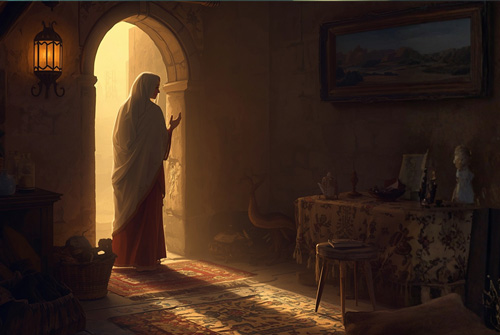
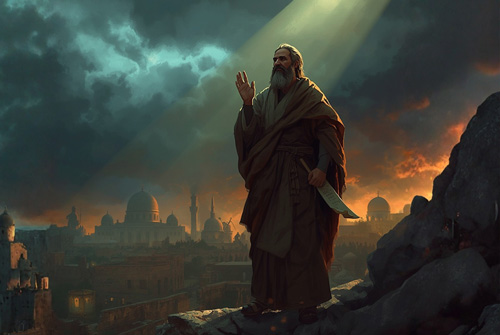
Samuel was dedicated to God and left by his parents to serve in the temple under Eli (see chapter 1 of 1st Samuel). While serving under Eli, our reading tells us that Samuel heard and responded to the voice of God and reported to Eli what he had heard. Consequently, in the Israelite tradition, Samuel was thenceforth considered the first in the line of the prophets of Israel, the first in the line of those called by God. In addition, Samuel is understood to be the last of the judges of Israel, as it was through Samuel that the monarchy came into existence in Israel. The theme of our first reading, and the golden thread that will connect it to our gospel, is that God called Samuel by name, and Samuel listened and responded, “your servant is listening.”
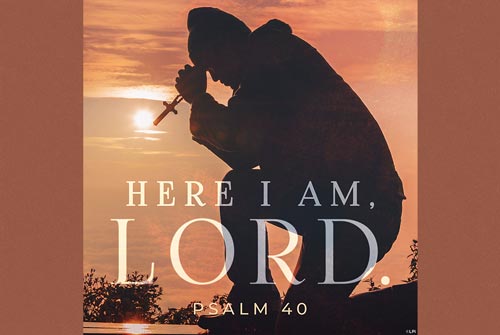
Our Responsorial Psalm carries on this theme with: “Here I am Lord; I come to do your will.”
Our gospel passage is the call of the first disciples, according to John. But there is also something very significant in this passage as we have a rounding out, or completion, of the prophetic tradition in Israel. And in that prophetic tradition, we would define a prophet as an individual whom God called and inspired with the Holy Spirit to speak on behalf of God. If we consider Samuel to be the first in the line of Israelite prophets, John the Baptist is the end of that line. It is John who brings attention to and, in a sense, introduces “The Lamb of God.” It is Christ, the Lamb of God who takes away the sins of the world, that the Old Testament prophecy points to, and it is John the Baptist who points him out.
Prior to the Incarnation, God spoke to the people through prophets. But, with the Incarnation, prophecy is no longer required as God has spoken to us directly through his Son. The age of prophecy ends with John the Baptist. And with the establishment of the church through the apostles, Christ’s ministry of speaking directly to us through the scriptures and the Sacraments and teaching of the church is carried on throughout the ages. But how did Jesus establish the church through the apostles? He called each of them by name, and they responded: “Here I am Lord; I come to do your will.” In our gospel passage this week, we have Andrew being told: “Come, and you will see.” And when Andrew presented his brother Simon to Jesus, he was told: “You are Simon, the son of John; you will be called Cephas,” which is translated Peter.
Now it’s up to us. God calls each of us by name. Are we listening? Are we responding?
Reference: Copyright LPI